
NewsTechnologyTeam
Contact
About Technology

Injectable resorbable microparticle matrix for periodontal tissue repair

Omgenis is developing a locally administered osteopromotive magnesium–PLGA composite microparticle medical device intended to provide a temporary resorbable synthetic grafting matrix that supports reconstruction of alveolar bone lost as a result of periodontitis.

Investigational technology · Preclinical development · No human clinical data

The Clinical Problem

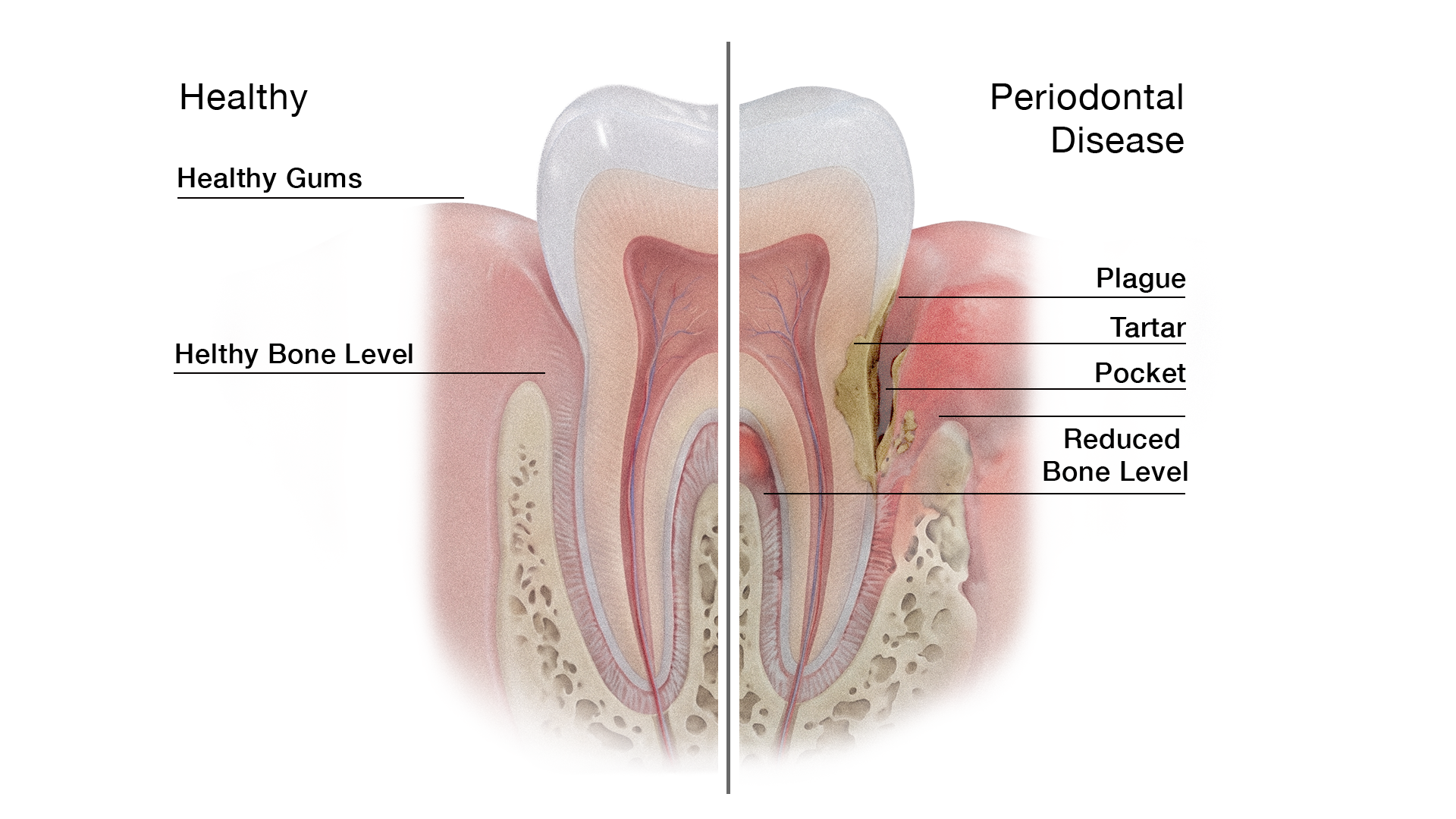
Periodontitis causes progressive loss of periodontal attachment and alveolar bone

Dysbiotic dental biofilm initiates periodontitis, while a persistent host inflammatory response drives periodontal tissue destruction and alveolar bone loss. Established periodontal therapy remains essential. However, selected periodontal osseous defects may persist or continue to progress after debridement and supportive care, creating a need for adjunctive approaches that support reconstruction of the lost alveolar bone.
Our approach

Local administration, temporary osteopromotive* grafting-matrix function and progressive resorption for periodontal reconstruction

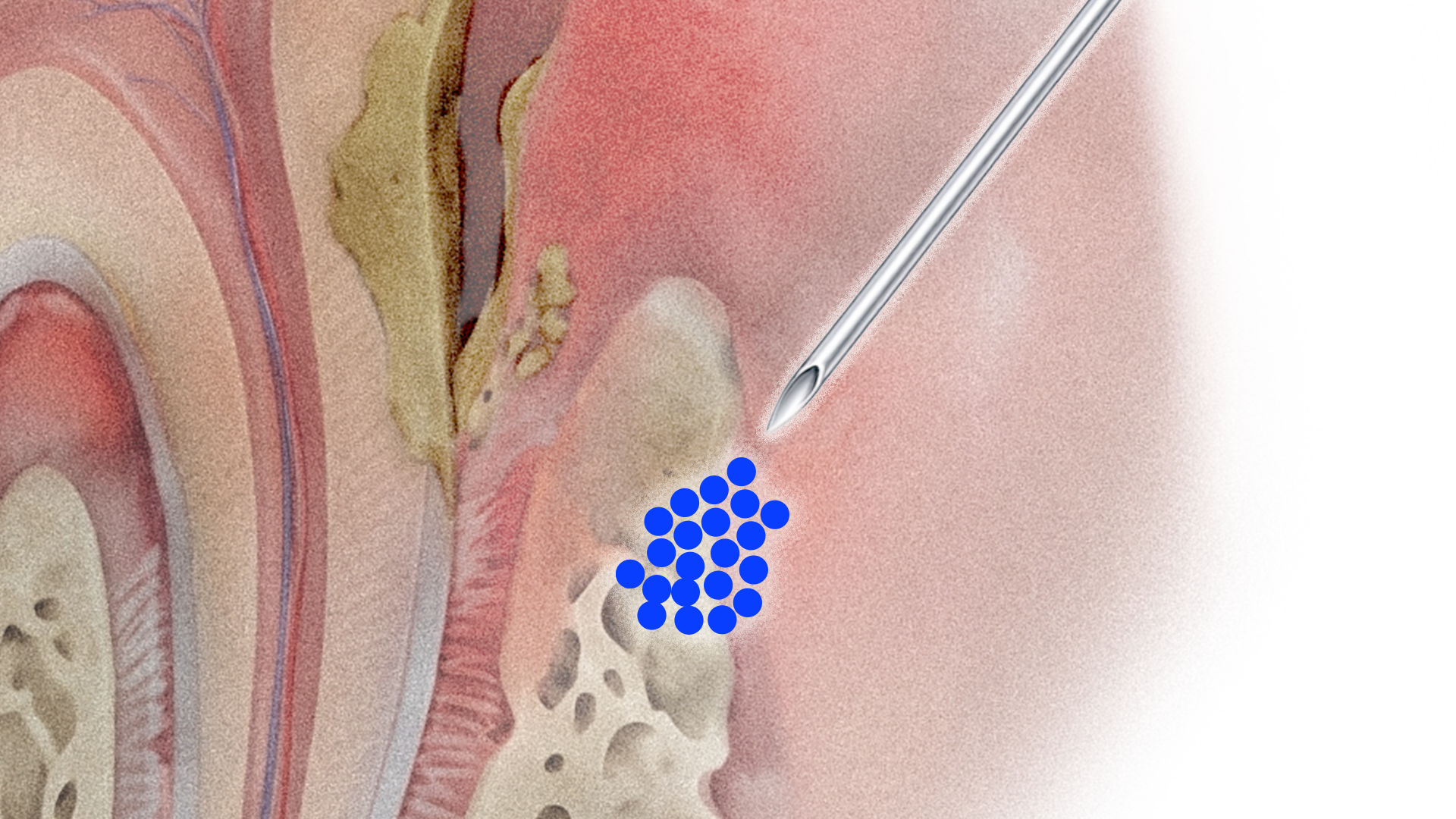
The Oradyn™ is  being developed as a medical device whose proposed principal intended action is based on the physical and material function of a locally retained, progressively resorbing microparticle matrix designed for minmally invasive, non-surgical, site-specific transgingival syringe-assisted administration through gingiva to the periodontal osseous defect. Osteopromotion and other local biological responses associated with magnesium degradation are considered intrinsic supportive properties of the material.
1. Administer locally
Injected through gingival tissue to the periodontal osseous defect as an adjunct to established periodontal therapy.
2. Provide a cohesive temporary three-dimensional interparticulate matrix
The locally administered microparticles collectively provide a temporary resorbable synthetic grafting matrix for temporary maintenance, and subsequent tissue integration and bone apposition
3. Resorb progressively
The PLGA-Mg microparticles progressively degrade. PLGA and particle attributes are intended to modulate fluid access, magnesium corrosion, hydrogen evolution, and the overall resorption profile.
4. Support periodontal healing and reconstruction
The development objective is reconstruction of the periodontal osseous defect and restoration of alveolar bone lost as a result of periodontitis. Preclinical models demonstrate alveolar-bone preservation under active challenge and reconstructive effects after disease induction and during resolution.
* Magnesium is known to be osteopromotive. "Osteopromotive" describes a material's capability to actively promote, accelerate, and enhance natural bone growth and healing. View Full Study (Wang JL et.al. . Adv Sci (Weinh). 2020 Feb)
Proposed Device description
and intended use

A temporary resorbable osteopromotive grafting matrix for transgingival administration to the periodontal osseous defect for reconstruction of periodontal tissue

Device Description
The investigational product Oradyn™ is a minimally invasive, non-surgically administered, syringe-deliverable, absorbable synthetic particulate grafting matrix composed of metallic magnesium–PLGA composite microparticles . It is intended for site-specific transgingival syringe-assisted administration through the gingiva to periodontal osseous defects following initial periodontal therapy. Following administration, the composite microparticles are intended to be locally distributed at the treated periodontal defect and collectively establish a temporary resorbable three-dimensional particulate matrix supporting host-tissue integration, new-bone apposition, and progressive periodontal osseous reconstruction. The material progressively resorbs through PLGA hydrolysis and electrochemical corrosion of the metallic-magnesium constituent.
Proposed intended use
The Oradyn™ PLGA–Mg Composite Microparticle Grafting Matrix is intended for minimally invasive, non-surgical, site-specific, syringe-assisted transgingival administration to periodontal osseous defects to provide a temporary, absorbable, synthetic particulate grafting matrix for periodontal osseous reconstruction.
Proposed principal intended action
Following administration, the resorbable PLGA–Mg composite microparticles are intended to be deposited in close apposition and undergo in situ cohesive assembly. The proposed principal intended action is the formation of a localized three-dimensional interparticulate grafting matrix and temporary maintenance at the treated periodontal osseous defect that supports host-tissue integration, new-bone apposition, and progressive periodontal osseous reconstruction.
Supportive degradation-associated biology
Magnesium-containing degradation products and associated osteopromotive, cellular and immunological responses are inherent aspects of material resorption. They assist the reconstructive performance of the material but are not intended to define its proposed principal intended action.
Closest existing FDA reference classification under evaluation: 21 CFR 872.3930 / LYC. De Novo pathway currently anticipated, subject to FDA feedback.
Product Concept

Oradyn™ — magnesium–PLGA composite microparticles

A single-use, site-specific transgingival administration concept containing osteopromotive magnesium–PLGA composite microparticles. Periodontitis is the lead development indication; peri-implantitis is a planned platform expansion.
Syringe-administrated format

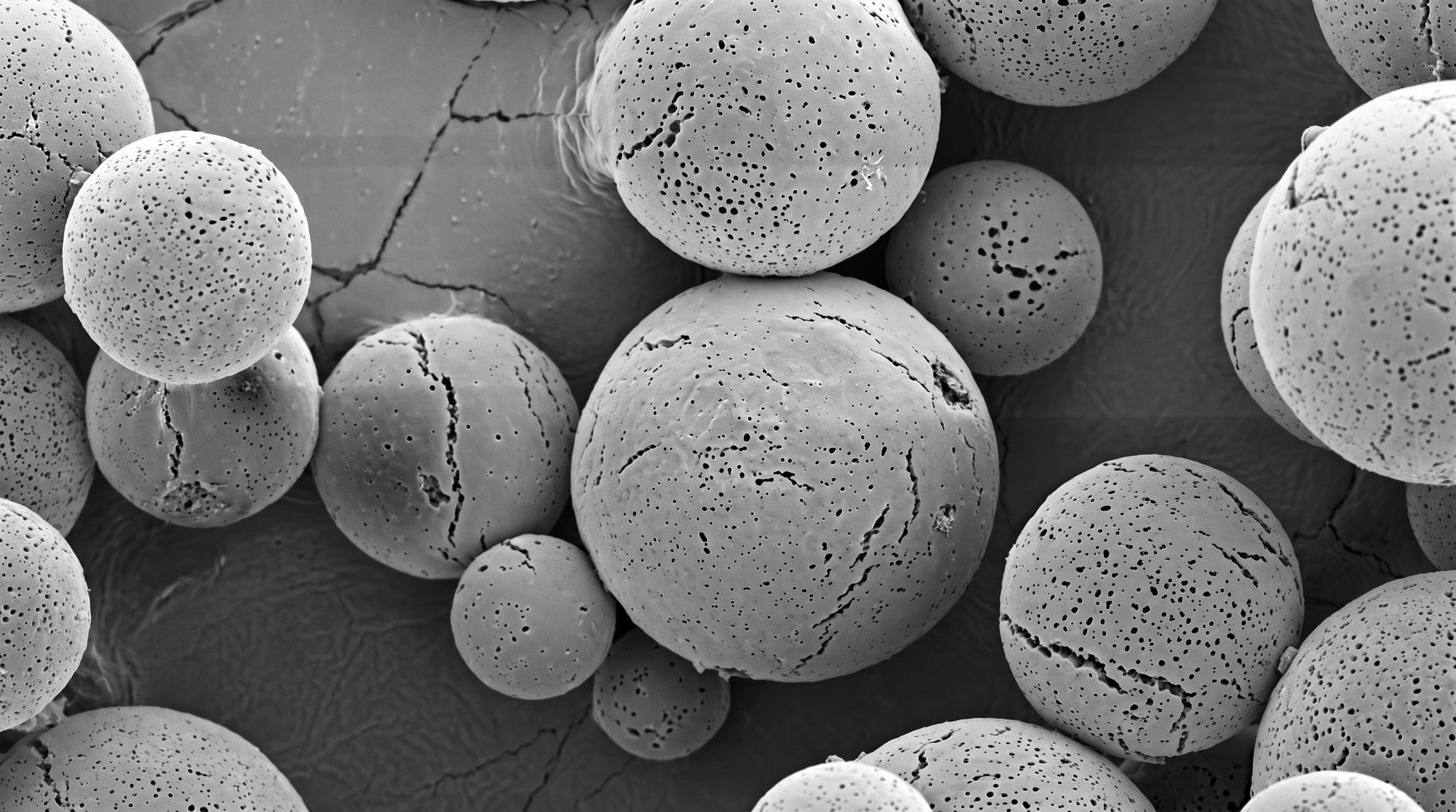
A single-use, site-specific administration concept containing a preclinically evaluated magnesium-in-PLGA microparticle formulation

Technology platform

Targeted indications: periodontitis and peri-implantitis

Architecture
Spherical porous microparticles, absorbable composite of metallic magnesium and PLGA.
Temporary reconstruction matrix
The loocally administered microparticles are designed to collectively provide a temporary resorbable synthetic grafting matrix for temporary maintenance, and subsequent tissue integration and bone apposition
Engineered degradation profile
The product is absorbable; the temporary matrix is intended to progressively resorb as its constituents degrade.
Antibiotic-free formulation
No antibiotic active pharmaceutical ingredient.
Workflow-compatible
Designed to integrate into established periodontal protocols.
Preclinical evidence

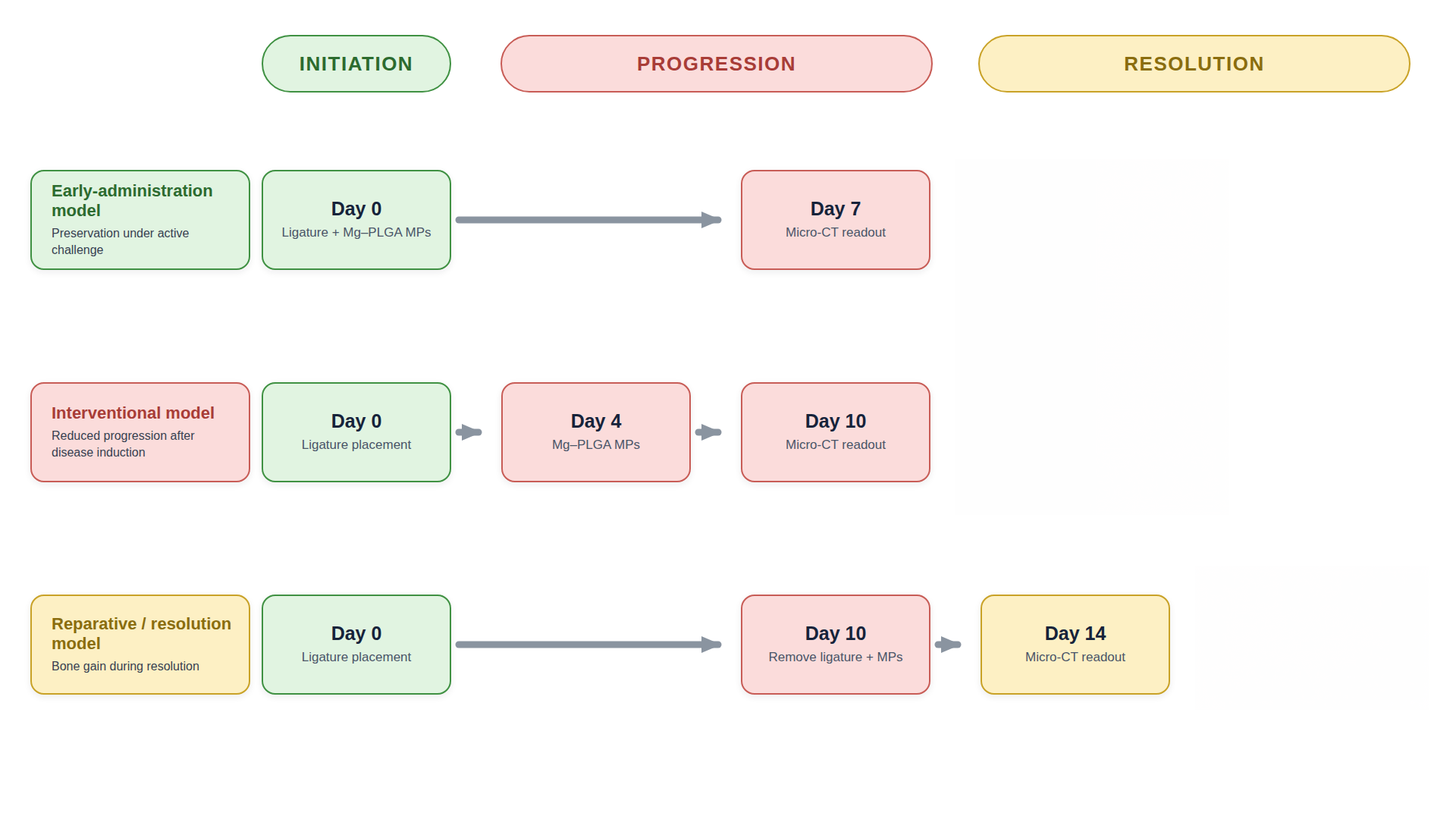
Bone preservation and reconstruction assessed across three experimental preclinical timing models.

The same magnesium–PLGA composite microparticle  formulation was evaluated in murine ligature-induced periodontitis models at disease challenge, after disease induction and at the start of resolution. Together, the models assess alveolar-bone preservation and reconstruction at different stages of the experimental disease process.
SCIENTIFIC HYPOTHESIS
Proposed material-led performance model
Following localized deposition, the microparticles are intended to undergo cohesive assembly and temporarily maintain a three-dimensional resorbable grafting matrix. This physical material function is intended to support host-tissue integration, new-bone apposition and reconstruction of alveolar bone lost due to periodontitis as the composite progressively resorbs.
‍
Supportive biological performance
Magnesium corrosion is associated in preclinical models with osteopromotive, macrophage-associated and bone-remodeling responses consistent with a local environment supportive of reconstruction. These responses are intrinsic supportive properties of the degrading material and are not intended to define the proposed principal intended action.
1. Early-administration model
Administration at disease challenge
Day 7 micro-CT assessment of alveolar-bone preservation under active challenge.
2. Interventional model
Administration after disease induction
Day 10 micro-CT assessment of arrest of further bone loss and reconstruction of previously lost alveolar bone.
3. Reparative/resolution model
Administration at ligature removal
Day 14 assessment of alveolar bone reconstruction during resolution.
Early-administration, interventional and reparative describe the timing and purpose of the animal models. They are not approved or cleared clinical indications
Preclinical evidence · Documented results

1. Early-administration model – Administration at disease challenge

Bone preservation during active experimental challenge.
Timing
PLGA-Mg microparticles administered at ligature placement.
Readout
Day 7 micro-CT assessment of circumferential and interdental bone loss.
Preclinical finding
The formulation reduced circumferential and interdental alveolar-bone loss compared with untreated and blank-microparticle controls
Clinical-development relevance
Demonstrates alveolar-bone preservation under active experimental challenge and provides supportive evidence for the reconstructive performance of the material.
Preclinical evidence · Documented results

2. Interventional model – Administration after disease induction

Reduced progression at an established experimental disease site.
Timing
Experimental periodontal disease was induced before local administration of PLGA-Mg microparticles.
Readout
Day 10 micro-CT assessment of ongoing bone-loss progression.
Preclinical finding
Delayed administration reduced ongoing bone-loss progression versus untreated and blank-microparticle controls.
Clinical-development relevance
Supports further evaluation as an adjunct at established disease sites following periodontal therapy.
Preclinical evidence · Documented results

3. Reparative model – Alveolar-bone reconstruction during resolution

Enhanced recovery at an established experimental disease site.

The reparative model evaluates whether local administration at removal of the experimental disease challenge supports reconstruction of previously lost alveolar bone during the subsequent resolution period.

Timing
Experimental periodontitis was induced for 10 days. At Day 10, the ligature was removed and the PLGA-Mg microparticle formulation was administered locally
Readout
Day 14 micro-CT assessment of alveolar-bone reconstruction relative to the Day 10 disease baseline and appropriate control groups.
Preclinical finding
Administration of PLGA-Mg microparticles resulted in greater reconstruction of previously lost alveolar bone during the resolution period than observed in untreated and blank-microparticle controls.The treated group showed statistically significant interdental bone gain versus the Day 10 disease baseline. The mean response reached the healthy-control reference range
Clinical-development relevance
Supports reconstruction of periodontal osseous defects as the primary development objective following control of the initiating periodontal disease challenge.
Preclinical evidence · Documented results

Supporting biological observations associated with reconstruction

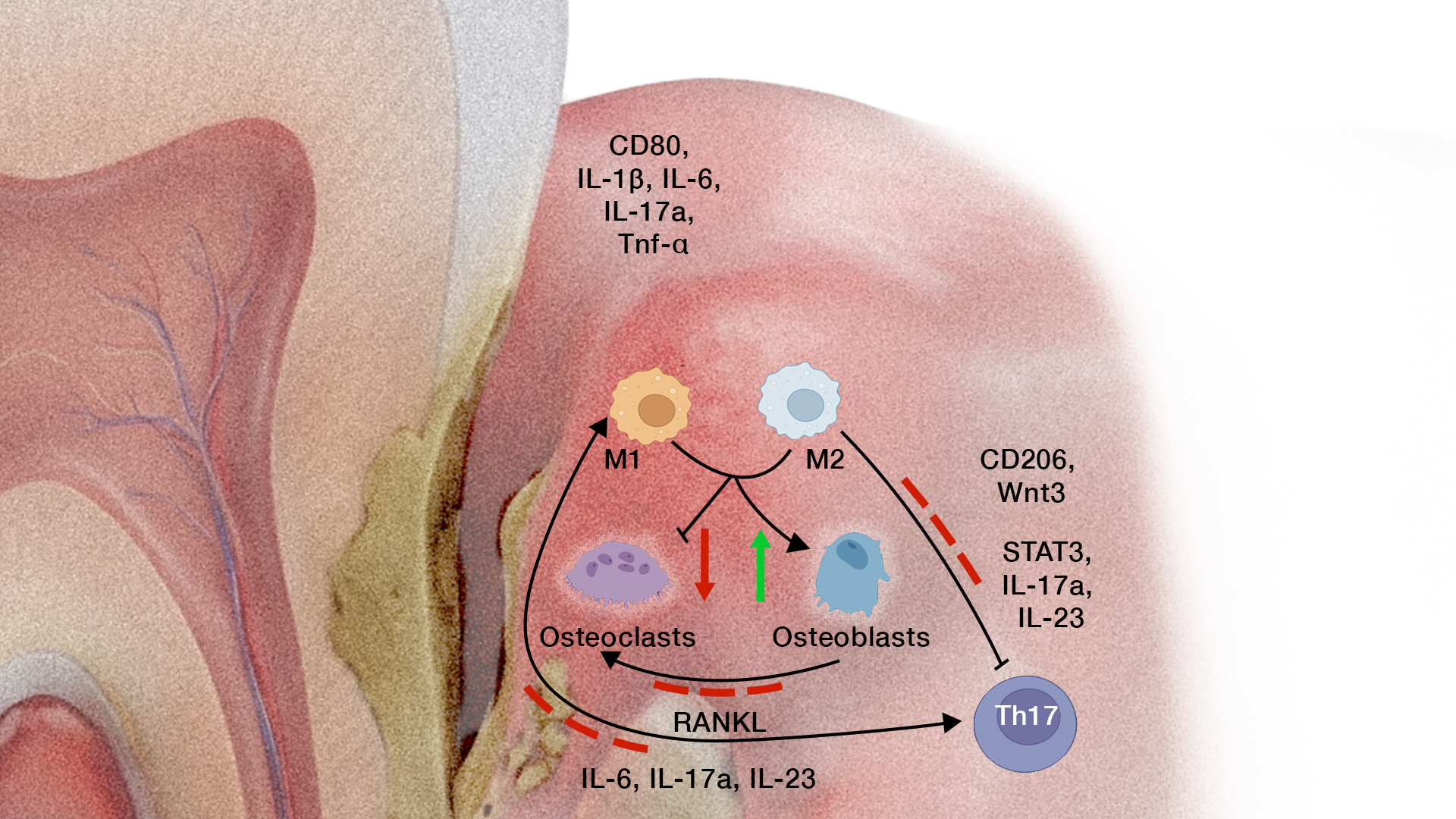
Additional preclinical analyses identified M2-like macrophage enrichment, a lower M1/M2 ratio and reduced osteoclastogenesis-related pathway signatures. These findings are consistent with the osteopromotive and repair-supportive biological performance of the corroding magnesium.

These findings are exploratory and preclinical. They support the scientific rationale for the material’s reconstructive performance but are not presented as the proposed principal intended action and do not establish clinical safety or effectiveness.
Platform development

Periodontitis first. Peri-implantitis next.

Periodontitis is the lead development indication, focused on reconstruction of periodontal osseous defects and restoration of alveolar bone lost as a result of the disease. Peri-implantitis is a planned platform expansion for reconstruction of peri-implant osseous defects and will require its own product validation, preclinical and clinical evidence, and regulatory strategy.

Development notice
This page describes investigational technology in preclinical development. There are no human clinical data. The product is not approved or cleared for commercial use. A De Novo pathway is currently anticipated in the United States, but final device classification, product code, intended use, indications, claims and premarket pathway remain subject to FDA review.
Quick Links
HomeTechnologyTeamContact
Contact
Linnankatu 3 B 55,
20100 Turku
Finland
Follow us
LinkedIn
© 2026 Omgenis